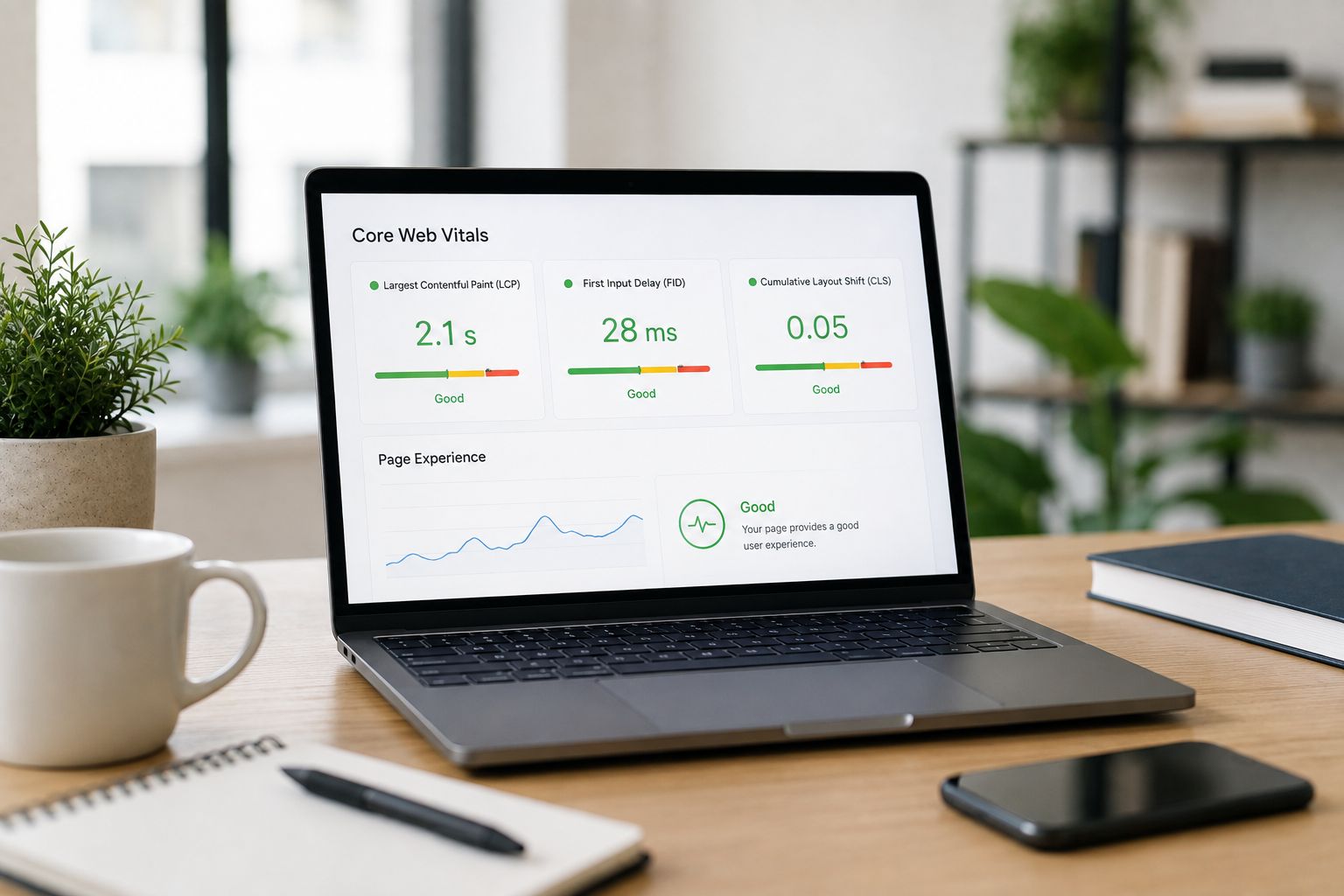
Small businesses face fierce online competition. Optimizing Core Web Vitals is a proven way to stand out. Core Web Vitals influence page performance, user experience, search rankings, and conversions from the very first click.
Visitors expect fast sites. In fact, 53% of mobile users abandon sites that take longer than three seconds to load (Think With Google, 2018). Google research shows "fast" sites, those meeting Core Web Vitals thresholds, can see up to double the conversion rates of "slow" sites (Google Webmasters, 2020). And 70% of online consumers say page speed influences their willingness to buy (Portent, 2021). In this guide, we’ll explain Core Web Vitals, show how they affect your Google Ads and organic traffic, and share local strategies to boost leads, booked calls, and revenue.
- "Fast" sites meeting Core Web Vitals thresholds can see up to double the conversion rate of "slow" sites (Google Webmasters).
- A one-second delay in mobile load time can decrease mobile conversions by up to 20% (Google/SOASTA Research).
- Landing page experience, including speed, accounts for up to 30% of your Google Ads Quality Score (WordStream).
- Sites meeting all Core Web Vitals thresholds see an average conversion lift of 24% (Google Webmasters).
Understanding Core Web Vitals and Their Importance
Core Web Vitals are Google’s standard metrics that measure key aspects of user experience on your site. They help you diagnose performance issues and drive data-driven improvements. For small businesses, solid Core Web Vitals translate directly into higher search visibility and more online lead generation.
What Are Core Web Vitals?
Data shows only 12% of mobile sites achieve the "good" threshold for all three metrics (HTTP Archive, 2023). Optimizing Core Web Vitals means improving loading, interactivity, and stability across devices.
- Largest Contentful Paint (LCP) – time to load the largest image or text block. Ideal ≤ 2.5 seconds.
- First Input Delay (FID) – time from user interaction to browser response. Ideal ≤ 100 milliseconds.
- Cumulative Layout Shift (CLS) – measure of unexpected layout shifts. Ideal ≤ 0.1.
How Core Web Vitals Affect User Experience
Each metric ties directly to user satisfaction and conversion rates:
- A 0.1s improvement in LCP can increase conversions by 8% (Think With Google, 2017)
- Pages with CLS below 0.1 experience 25% fewer accidental clicks, boosting engagement (Google Developers Blog, 2021)
- Reducing FID by 50ms can lift pages-per-session metrics by up to 6% (Search Engine Journal, 2022)
Want to turn clicks into real customers? Let our certified specialists manage your Google Ads campaigns to maximize ROI and lower your cost per lead.
Contact Our Google Ads TeamPage Speed for Ads: Enhancing Your Google Ads Performance
Fast landing pages power stronger paid campaigns. When Google Ads click costs are high, every millisecond of load time counts. A smoother page experience improves Quality Score, lowers cost-per-click (CPC), and raises ROI.
The Relationship Between Page Speed and Ad Performance
Slow landers drive up CPC and waste ad spend. By focusing on speed, you turn clicks into revenue.
- A one-second delay in mobile load time can decrease mobile conversions by up to 20% (Google/SOASTA Research, 2017)
- 53% of visitors abandon a page that takes longer than three seconds to load after clicking an ad (Think With Google, 2018)
- Landing page experience, including page speed, accounts for up to 30% of Google Ads Quality Score (WordStream, 2023)
Optimizing Page Speed for Better Ad Results
To boost ad performance, apply these tactics:
- Compress and convert images to WebP to reduce weight by 30–50% (HubSpot, 2023)
- Implement a CDN to cut latency by up to 60% for East Coast U.S. visitors (Cloudflare, 2022)
- Minimize third-party scripts to reduce render-blocking time by 40% (Google Developers, 2022)
- Leverage browser caching and server-level compression
- Use Core Web Vitals audits in PageSpeed Insights to track improvements
Boosting Your Conversion Rate Through Core Web Vitals Optimization
Solid Core Web Vitals drive measurable lifts in conversions, organic traffic, and engagement.
How Core Web Vitals Influence Conversion Rates
Improving these metrics boosts SEO and pulls more qualified leads into your funnel.
- Sites meeting all Core Web Vitals thresholds see an average conversion lift of 24% (Google Webmasters, 2020)
- Bounce rates increase by 32% on pages with LCP over 4 seconds (Portent, 2021)
- Organic sessions can increase by up to 80% after improvements (Search Engine Journal, 2022)
Strategies to Improve Conversion Rates with Core Web Vitals
These practices align with best-practice website design standards.
- Prioritize mobile-first design
- Apply image lazy-loading and preloading for hero images
- Optimize server response with caching and hosting upgrades
- Use font-display: swap to prevent layout shifts
- Conduct regular performance audits
- Set a performance budget to catch regressions early
Local Strategies for Optimizing Core Web Vitals in Myrtle Beach
Local businesses need targeted tactics to win both online and offline customers. As a real-world example, here’s how a business in a seasonal, tourism-heavy market like Myrtle Beach, SC would align Core Web Vitals improvements with local SEO, principles that apply to any local market.
Local Optimization Tips
- Host on a U.S. East Coast server or geo-targeted CDN
- Implement LocalBusiness and GeoCoordinates schema
- Optimize local imagery in WebP
- Claim and optimize your Google Business Profile
- Add internal links to your SEO services, Google Ads management, and custom website design pages
Key Local Stats
- 46% of Google searches have local intent (Google, via Search Engine Roundtable, 2018)
- Location-based mobile searches convert to offline purchases at a notably high rate
Frequently Asked Questions
Conclusion
Optimizing Core Web Vitals is essential for small businesses aiming to enhance user experience, reduce bounce rates, and drive conversions. Faster page speed improves organic rankings and lowers CPC.
Key Takeaways:
Improve LCP, FID, and CLS to unlock up to 24% conversion lifts. Speed up landing pages to enhance Quality Score. Implement mobile-first design, image optimization, and caching. Use local tactics to capture nearby searches. Partner with expert SEO services for audits and budgeting.
Sources
- Think With Google (2018) – Mobile Page Speed Research
- Google Webmasters (2020) – Core Web Vitals and Conversion Rates
- Portent (2021) – Page Speed and Purchase Behavior
- HTTP Archive (2023) – Core Web Vitals Technology Report
- Think With Google (2017) – LCP and Conversion Impact
- Google Developers Blog (2021) – Cumulative Layout Shift Research
- Search Engine Journal (2022) – First Input Delay and Engagement
- Google/SOASTA Research (2017) – Mobile Load Time and Conversions
- WordStream (2023) – Google Ads Quality Score Factors
- HubSpot (2023) – Image Optimization Best Practices
- Cloudflare (2022) – CDN Latency Benchmarks
- Google Developers (2022) – Third-Party Script Performance
- Google, via Search Engine Roundtable (2018) – Local Search Intent Data